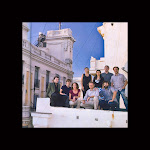
::: … De repente, la máquina comenzó a asesinar gente… / … All of a sudden, the machine started to murder people… ::: Primero, a enfermos terminales, luego, a reincidentes de evasión fiscal. SIMULACRUM (c)* mata en nombre del derecho a vivir pacíficamente de “la gente normal” y de la solvencia económica del sistema / First, terminally ill patients, afterwards, recidivist tax evaders. SIMULACRUM (c)*starts to kill in the name of the right of ‘the normal people’ to live peacefully and in the name of the economic solvency of the system ::: El Gabinete de Crisis se enfrentó a un escenario crítico: ¿Debíamos desconectar a SIMULACRUM (c)? ¿Debíamos aceptar esta forma de gobernanza necropolítica en favor de los intereses de la mayoría que se ajusta a la ley? ¿Estábamos dispuestos a pasar por otra crisis económica, al prescindir de sus capacidades de gestión? ¿Teníamos derecho a desconectar a SIMULACRUM (c), una vez que comenzaba a dar signos de conciencia e inteligencia (artificial)? ¿Había nacido una nueva forma de vida? ¿Estábamos respondiendo al asesinato con otro modo de asesinato? ¿Podíamos / debíamos hackear su sistema? ¿Puede ser la “idiotez” o el comportamiento impredecibles, la única posibilidad de resistencia, ante los espacios de control? ¿Debíamos aprender a convivir con SIMULACRUM (c)? ¿Cómo integramos estas nuevas “especies” en nuestros ecosistemas y nuestros marcos de cohabitación? Si aprende de nuestros comportamientos ¿podíamos enseñarle a cuidarnos? ¿Podría SIMULACRUM (c) integrar en sus protocolos otras prácticas, como el deseo o el placer, más allá de la funcionalidad y la eficiencia? ¿Debíamos delegar en la tecnología todavía más competencias, como la reproducción, para desafiar la normatividad imperante? ¿Es adecuada la dicotomía “nosotros” (humaidad) / “ello” (SIMULACRUM (c))? / The Crisis Cabinet faced a critical scenario:
Should we disconnect SIMULACRUM (c)? Should ‘we’ accept this way of necropolitical governance in the interest of the majority that followed the law? Were ‘we’ ready to go through another economic crisis, once ‘we’ dispense with its management abilities? Did ‘we’ have the right to disconnect SIMULACRUM (c), after it started to show signs of awareness and (artificial) intelligence? Was a new way of life born? Were ‘we’ answering to murder with more murder? Could / Should ‘we’ hack its system? Can ‘idiocy’ or other ways of unpredictable behaviours be the only possible way of resistance, in spaces of control? Should ‘we’ learn to get along and live together with SIMULACRUM (c)? How do ‘we’ integrate these new ‘species’ in our ecosystems and our spaces of cohabitation? If it learns from our behaviours, could ‘we’ teach it to take care of ‘us’? Could SIMULACRUM (c) integrate in its protocols other practices, such as desire or pleasure, beyond functionality and efficiency? Should ‘we’ delegate in technology even more competences, such as reproduction, in order to challenge the dominant normativity? Is it adequate the dichotomy ‘us’ (humanity) / ‘It (SIMULACRUM (c))’? ::: ... Pero sobre todo… ¿Estaba el Gabinete afrontando la situación con los vocabularios adecuados? ¿No estábamos asumiendo una perspectiva demasiado humanista para interpretar de una manera apropiada los hechos? / ... But, above all... was the Cabinet facing the situation with the adequate vocabularies? Weren’t ‘we’ assuming a still too humanistic perspective to interpret properly these facts? ::: Muchísimas gracias a Nerea Calvillo, Pablo Hermassen y Martin Tironi, a toda la gente que participasteis como expertos en el VI Gabinete de Crisis de Ficciones Políticas y a todos los organizadores del #4sEASST2016 CONFERRENCE BCN - Science + technology by other means / Many thanks to Nerea Calvillo, Pablo Hermassen and Martin Tironi, to all the people that participated in the VIth Crisis Cabinet of Political Fictions, and to everybody who organised #4sEASST2016 CONFERRENCE BCN - Science + technology by other means ::: * SIMULACRUM (c) es el nombre del prototipo basado en inteligencia artificial, desarrollado para la gestión del metabolismo urbano de un barrio de la ciudad Hereandnow
/ * SIMULACRUM (c) is the name of a prototype based in artificial intelligence, developed for the management of the urban metabolism of a neighbourhood of the city Hereandnow. :::
Mostrando entradas con la etiqueta CONGRESO. Mostrar todas las entradas
6 de septiembre de 2016
3 de septiembre de 2016
160902 - LIVING (IN) BLACK BOXES
::: The term ‘black box’ is among the recurring vocabulary of STSs. It is usually understood as a series of technological processes that run invisibly within efficient socio-technical frameworks. The technological black box has been a fruitful concept in many fields in architecture. However, there is another use of the term ‘black box’ beyond architecture. In the field of performing arts, the black box is the space formed by the stage of a theatre. These two views of the concept of ‘black box’ can be seen to share a ‘happy coincidence’. Or they can be seen as a chance to extend the notion of black box that is usually employed in the STSs, such as architecture. How can this second notion of stage black box extend the notions of ‘technological black box’? ::: Uriel Fogué's lecture ‘Domestic theatres: living (in) black boxes’, Friday 2nd September, at 4pm! :::
* Track: ‘Doing theory by other means: how does architectural production challenge STS and ANT’
* Convenors: Nerea Calvillo, Ignacio Farias
* Discussant: Michael Guggenheim
* Authors: Lucas Pohl (Goethe University Frankfurt), Nerea Calvillo (University of Warwick), Alfonso Borragan and Blanca Pujals (Etsab and Independent Studies Program (Macba Museum, Bcn), Aino Alatalo (University of Tampere), Monika Kurath (ETH Zurich), Bernhard Böhm (ETH Zurich), Kåre Poulsgaard (University of Oxford), Enrique Nieto (University of Alicante), Uriel Fogue (Universidad Europea / Elii), Miguel Mesa del Castillo(Universidad de Alicante), Ariane d'Hoop (Université Libre de Bruxelles), Ignacio Farias (TU München) and Gonzalo Correa (Universidad de la República).
4S/EASST CONFERRENCE BCN 2016
Science + technology by other means
Barcelona!
+ info:
http://www.nomadit.co.uk/easst/easst_4s2016/panels.php5?PanelID=4001
* Track: ‘Doing theory by other means: how does architectural production challenge STS and ANT’
* Convenors: Nerea Calvillo, Ignacio Farias
* Discussant: Michael Guggenheim
* Authors: Lucas Pohl (Goethe University Frankfurt), Nerea Calvillo (University of Warwick), Alfonso Borragan and Blanca Pujals (Etsab and Independent Studies Program (Macba Museum, Bcn), Aino Alatalo (University of Tampere), Monika Kurath (ETH Zurich), Bernhard Böhm (ETH Zurich), Kåre Poulsgaard (University of Oxford), Enrique Nieto (University of Alicante), Uriel Fogue (Universidad Europea / Elii), Miguel Mesa del Castillo(Universidad de Alicante), Ariane d'Hoop (Université Libre de Bruxelles), Ignacio Farias (TU München) and Gonzalo Correa (Universidad de la República).
4S/EASST CONFERRENCE BCN 2016
Science + technology by other means
Barcelona!
+ info:
http://www.nomadit.co.uk/easst/easst_4s2016/panels.php5?PanelID=4001
Etiquetas:
COMUNICACIÓN,
CONFERENCIA,
CONGRESO,
PRESENTACIÓN,
SEMINARIO
31 de agosto de 2016
160901 - VI Gabinete de Crisis de Ficciones Políticas: SIMULACRUM©: prototyping the city of tomorrow
::: La metrópolis Hereandnow es un caso piloto para testar SIMULACRUM©: un prototipo de un modelo de generación computacional, basado en tecnología algorítmica e IA, responsable de los procesos de toma de decisión democrática de la ciudad /
The metropolis of Hereandnow is a pilot case to test SIMULACRUM©: a prototype of a computer-generated model, based in algorithmic technology and AI, responsible for automate democratic decision-making processes in the city
::: SIMULACRUM© ahora precisa de un experimento a escala real para testar los modelos de gobernanza, con el objetivo de producir resultados verificables y replicables a gran escala / SIMULACRUM© now requires conducting a real live experiment to test the governance models in order to produce verifiable and replicable results in a bigger scale ::: El Gabinete es convocado para a) decidir las áreas de gobernanza de la ciudad que serán delegadas en SIMULACRUM©, b) discutir los modelos y los sistemas políticos que deberían ser testados en el experimento, c) continuar con la implementación del proyecto y d) ajustar los protocolos de comunicación, cohabitación y arbitraje entre SIMULACRUM© y los humanos, así como sus respectivos derechos y obligaciones /
The Cabinet is summoned to a) decide which areas of city governance will be handed over to SIMULACRUM©, b) discuss the political models and systems that should be tested in this experiment, c) follow the initial implementation of the project and d) adjust the protocols of communication, cohabitation, and arbitrage between SIMULACRUM© and humans, as well as their respective rights and obligations ::: 1 September 2016 / 1st September 2016
::: 4s Conference, VIP ROOM ::: ¡Trae tu comida! / Bring your food! :::
+ info:
The metropolis of Hereandnow is a pilot case to test SIMULACRUM©: a prototype of a computer-generated model, based in algorithmic technology and AI, responsible for automate democratic decision-making processes in the city
::: SIMULACRUM© ahora precisa de un experimento a escala real para testar los modelos de gobernanza, con el objetivo de producir resultados verificables y replicables a gran escala / SIMULACRUM© now requires conducting a real live experiment to test the governance models in order to produce verifiable and replicable results in a bigger scale ::: El Gabinete es convocado para a) decidir las áreas de gobernanza de la ciudad que serán delegadas en SIMULACRUM©, b) discutir los modelos y los sistemas políticos que deberían ser testados en el experimento, c) continuar con la implementación del proyecto y d) ajustar los protocolos de comunicación, cohabitación y arbitraje entre SIMULACRUM© y los humanos, así como sus respectivos derechos y obligaciones /
The Cabinet is summoned to a) decide which areas of city governance will be handed over to SIMULACRUM©, b) discuss the political models and systems that should be tested in this experiment, c) follow the initial implementation of the project and d) adjust the protocols of communication, cohabitation, and arbitrage between SIMULACRUM© and humans, as well as their respective rights and obligations ::: 1 September 2016 / 1st September 2016
::: 4s Conference, VIP ROOM ::: ¡Trae tu comida! / Bring your food! :::
+ info:
VI Gabinete de Crisis de Ficciones Políticas:
Cabinet of Political Fictions - SIMULACRUM©: prototyping the city of tomorrow
http://www.nomadit.co.uk/easst/easst_4s2016/panels.php5?PanelID=3996
https://www.facebook.com/events/315975562081749/
Cabinet of Political Fictions - SIMULACRUM©: prototyping the city of tomorrow
http://www.nomadit.co.uk/easst/easst_4s2016/panels.php5?PanelID=3996
https://www.facebook.com/events/315975562081749/
8 de noviembre de 2015
151108 - Actualidad de Gilles Deleuze (1925-1995)
Videos del Congreso / Videos of the Congress: "Actualidad de Gilles Deleuze (1925-1995)".
Con las intervenciones de / with the participation of: Amanda Adnama, Emma Ingala, Francisco José Martínez, José Luis Pardo, Teresa Oñate, Luis Ferrero, Belén Castellanos, Vicente Muñoz-Reja, Diego Herranz Andújar, Juan Manuel Aragüés, Julien Canavera, Antonio Castilla,Catarina Pombo, Belén Quejigo, Luis Franco, Miguel Ángel Martínez, Alberto Navarro, Santiago Auserón y / and Uriel Fogué :::
+ info:
Canal UNED Congreso Actualidad de Gilles Deleuze (1925-1995)
Conferencia Uriel Fogué: Las arquitecturas de Sade y Masoch desde Deleuze. Marcos eco-eróticos para interpretar la ciudad
+ info:
Canal UNED Congreso Actualidad de Gilles Deleuze (1925-1995)
Conferencia Uriel Fogué: Las arquitecturas de Sade y Masoch desde Deleuze. Marcos eco-eróticos para interpretar la ciudad
Etiquetas:
CONFERENCIA,
CONGRESO,
DEBATE,
ENCUENTRO,
INVESTIGACIÓN
28 de octubre de 2015
151028 - CONGRESO: ACTUALIDAD DE GILLES DELEUZE (1925-1995)
::: Este viernes Uriel Fogué participará en el CONGRESO: ACTUALIDAD DE GILLES DELEUZE (1925-1995), donde hablará de 'Las arquitecturas de Sade y Masoch desde Deleuze. Marcos eco-eróticos para interpretar la ciudad', rodeado de una gente increíble (!!!) / Next Friday Uriel Fogué shall participate in the CONGRESS: ACTUALIDAD DE GILLES DELEUZE (1925-1995). He will speak about the 'architectiures of Sade and Masoch from Deleuze. Eco-erotic frameworks to interpret the city'. ::: Para Deleuze, Sade y a Masoch, por encima de "enfermos" o "casos clínicos", fueron "grandes antropólogos" y "grandes artistas". Siguiendo la aproximación estética deleuziana, podríamos añadir que, además, estos autores "malditos" también fueron "grandes arquitectos" y, como tales, deberían ser reconocidos dentro de la historia y la crítica de la arquitectura. / Deleuze stated that both Sade and Masoch, more than ‘sick’ or clinical cases, are "great anthropologists", as well as "great artists". Following the Deleuzian aesthetic approach, we could argue that this "accursed" authors are also "great architects" and, as such, they should be recognized in the history and criticism of architecture. ::: El congreso comienza el jueves y termina el sábado.
Dirigido por Francisco José Martínez (UNED) y organizado por Emma Ingala (UCM) y Amanda Núñez (UNED). / The congress starts Thursday and finishes on Saturday.
Directed by Francisco José Martínez (UNED) and organised by Emma Ingala (UCM) and Amanda Núñez (UNED). :::
Dirigido por Francisco José Martínez (UNED) y organizado por Emma Ingala (UCM) y Amanda Núñez (UNED). / The congress starts Thursday and finishes on Saturday.
Directed by Francisco José Martínez (UNED) and organised by Emma Ingala (UCM) and Amanda Núñez (UNED). :::
22 de junio de 2015
150617 - V ENCUENTRO DE LA RED esETS
::: El Gabinete de Crisis de Ficciones Políticas participa en el V Encuentro Red esCTS 2015 / The Crisis Cabinet of Polical Fictions participates in the V Encounter Red esCTS 2015 ::: dentro de "Encuentro en común: coreografías epistémicas", entre mucha gente interesante a la que seguimos y admiramos! / in the "Meeting in common: epistemic choreographies", among so many interesting people we follow ::: 1-3 de julio de 2015 / 1st-3rd 2015 :::
+ info:
Etiquetas:
[INTER]SECCIÓN,
COMUNICACIÓN,
CONGRESO,
DEBATE,
GRUPO DE TRABAJO,
INVESTIGACIÓN,
PRESENTACIÓN,
SEMINARIO
23 de abril de 2015
150416 - CONGRESO DE FILOSOFÍA
::: Uriel Fogué participa en el 52 Congreso de filosofía joven "Filosofía y presente: pensar la crisis" / Uriel Fogué will take part in the 52nd Congress of Young Philosophy "Philosophyía and present: Thinking the crisis" ::: Donde hablará de: "Las arquitecturas de Sade y Masoch. Marcos eco-eróticos para la interpretación de la ciudad" / Where he will talk about: "The architectures of Sade and Masoch. Eco-erotic Frameworks to interprer the city" ::: Mesa: "Crisis de la ciudad: habitar el espacio urbano hoy" / Table: Crisis of the City: Inhabiting Urban Space Today" ::: Jueves 16 de abril 2015, 17h / Tursday 16th April 2015, 5pm ::: En / In: Centro de Historias de Zaragoza. Pza. San Agustín, 2 ::: Las ponencias on-line aquí / Lectures on line, here:
http://www.filosofiajoven52.com/?page_id=544
Etiquetas:
CONFERENCIA,
CONGRESO,
DEBATE,
MESA REDONDA,
VIAJE
21 de noviembre de 2014
VIDEO HOUSE OF WOULD - ARQUIA PROXIMA
::: Video del Foro Arquia Próxima donde Eva Gil presenta la House of Would. Granada, 23-10-2014 / Video of the Forum Arquia Próxima where Eva Gil presents the House of Would :::
+ info: Video
8 de agosto de 2014
140808 - SUBA 2014 - LA PAZ
::: El lunes 11 de agosto de 2014 dará comienzo el taller SUBA La Paz 2014 / Next Monday 11th August 2014 begins the work shop SUBA La Paz 2014 ::: "SuBA es un lugar de acción sobre la ciudad, que reúne a diversos interesados a proponer a través de talleres proyectuales, instalaciones, debates y publicaciones, acciones sobre el territorio urbano y su impacto en el desarrollo regional y la calidad de vida de su población / "SuBA is a place of action over the city, bringing together various stakeholders to propose project workshops, installations, discussions and publications, actions on urban territory and its impact on regional development and quality of life of its population" ::: Invitados internacionales / International guests: LEO VAN BROECK (BELGICA), OANA BOGDAN (RUMANA), URIEL FOGUÉ (ESPAÑA), JUN SUNG KIM (COREA), EDUARDO FERRONI (BRASIL), BYEONG JOONG KANG (KOREA), MARKUS VOGL (AUSTRIA) ::: Docentes SuBA / Teachers SuBA: MIGUEL BAUDIZZONE (ARGENTINA), ANDRES FERRARI (ARGENTINA), JAVIER RIVEROLA (ARGENTINA), CARLOS GALINDEZ (ARGENTINA), SERGIO GUTARRA (ARGENTINA), ALBERTO TEXIDO (CHILE), GUSTAVO ARTEAGA (COLOMBIA), MAX FEDERICO ZOLWKER (ARGENTINA) :::
+ info:Web SUBA
+ info:Web SUBA
Etiquetas:
CONFERENCIA,
CONGRESO,
DEBATE,
DOCENCIA,
GRUPO DE TRABAJO,
VIAJE,
WORKSHOP
21 de abril de 2014
140421 - FICTION: THE IMPOSSIBLE FRIENDSHIP
::: Vídeo del simposio 'What Criticism?' que tuvo lugar en el Piper Auditorio del GSD de Harvard / Video of the symposium 'What Criticism?' held at Piper Auditorium, Harvard GSD ::: La revista Plot publicará sucesivamente los vídeos de todas las contribuciones al encuentro / Plot magazine will be publishind the videos on all the contributions to the encounter ::: La intervención de Uriel Fogué giró en torno a las siguientes preguntas: ¿Por qué cuanto más nos adentramos en la ficción, más hablamos del presente...? ¿Cuál es el papel de la ficción en la crítica? / Uriel Fogué's intervention focused on the following questions: "Why the further we move into fiction, the more we speak about the present...? What is the role of fiction in critique?" ::: Concepto / Concept: Florencia Rodríguez.Iimagen / Image: Pablo Gerson. Investigación y comunicación / Research and communication: Irene Chin - Matthew Teismann. Asistente vissual / Visual assistant: Javier Rojas :::
+ info:
Video Uriel Fogue - What Criticism
PlotTV
+ info:
Video Uriel Fogue - What Criticism
PlotTV
Etiquetas:
ARTÍCULO,
COMUNICACIÓN,
CONFERENCIA,
CONGRESO,
DOCENCIA,
ENCUENTRO,
GRUPO DE TRABAJO,
INVESTIGACIÓN,
PRESENTACIÓN,
PUBLICACIONES,
VIDEO
3 de octubre de 2013
131003 - WE TRADERS, PECHAKUCHA / WORKSHOP
::: Los We-Traders generan un amplio espectro de posibilidades de actuación cuando se producen crisis urbanas, sean económicas, sociales o ecológicas. Lo que tienen en común todos estosWe-Trades es difuminar los límites entre compradores y vendedores: los consumidores se convierten en co-productore / We-Traders respond to crisis in several arenas of urban life, be it economic, social or ecological. What these We-Trades all have in common is that they diffuse the boundaries between buyers and sellers: consumers become co-producers ::: El proyecto We-Traders. Cambiamos crisis por ciudad conecta iniciativas de artistas, diseñadores, activistas y muchos otros ciudadanos de cinco contextos europeos específicos. En Lisboa, Madrid, Toulouse, Turín y Berlín, la actual crisis se manifiesta en diferentes facetas, desde las arcas vacías y la polarización social, hasta una sociedad civil débil como resultado de un crecimiento excesivo / The project We-Traders. Swapping Crisis for City connects initiatives by artists, designers, activists and many other citizens from five distinct European contexts. In Lisbon, Madrid, Toulouse, Turin and Berlin the current crisis manifests different facets from empty coffers and social polarisation to a lack of civic sense as a result of excessive growth ::: En estos tiempos de crisis, los We-Trades son particularmente interesantes porque la co-determinación se convierte en co-autoría. We-Trade favorece la sostenibilidad ecológica, económica y social, pues todo ciudadano que esté activamente implicado en el desarrollo, producción e intercambio, también cuidará de las cosas / In times of such crisis We-Trading is particularly interesting because co-determination becomes co-authoring. We-Trade increases ecological, economic and social sustainability. Any citizen who is actively involved in development, production and exchange assumes responsibility for the outcome ::: We-Traders. Cambiamos crisis por ciudad crea una plataforma de conocimiento y producción para los We-Traders actuales y futuros. ¿Qué iniciativas funcionaron bien en un contexto determinado? ¿Qué elementos se pueden replicar en otros contextos? ¿Cómo se configura la relación entre iniciativa privada y administración pública? Al presentar no sólo las iniciativas concretas sino también a las personas que están detrás, pretendemos intensificar el intercambio de experiencias / We-Traders. Swapping Crisis for City creates a knowledge and production platform for current and future We-Traders. Which practices worked well? Can certain elements be replicated elsewhere? How does the collaboration between private initiative and public bodies work out? The exchange of experiences is greatly facilitated by not only focusing on the projects, but also the people behind them ::: Comisarias / Curators: Angelika Fitz y Rose Epple. Co-comisario / Co.curator: Javier Duero. Directora del Goethe Institute Madrid: Margareta Hauschild ::: We-Traders Foro Madrid ::: 3-4 Octubre de 2013 / 3rd-4th October 2013 ::: Programa / Programme:
- 18:00h. Introducción a cargo de Margareta Hauschild, directora del Goethe Institute Madrid, y el co-comisario del proyecto Javier Duero / Introduction by Margareta Hauschild, director of the Goethe Institute Madrid, and the co-curator ot the project Javier Duero.
- 18:15h. Ponencia de / Lecture by Florian Schmidt
- 18:35h. Ponencia de / Lecture by We-Traders. Santiago Eraso
- 18:00h. Introducción a cargo de Margareta Hauschild, directora del Goethe Institute Madrid, y el co-comisario del proyecto Javier Duero / Introduction by Margareta Hauschild, director of the Goethe Institute Madrid, and the co-curator ot the project Javier Duero.
- 18:15h. Ponencia de / Lecture by Florian Schmidt
- 18:35h. Ponencia de / Lecture by We-Traders. Santiago Eraso
- 18:55h. Debate / Debate
- 19:30h. Presentación de seis We traders en formato 19x19 (en directo) / Presentation of six We traders in format 19x19 (live)
- 20:25h. Debate / Debate
- 21:00h. Cierre de la sesión / Close session
+ info:
http://cms.goethe.de/ins/es/mad/ver/es11641308v.htm
http://medialab-prado.es/article/wetraders
http://www.goethe.de/wetraders
- 19:30h. Presentación de seis We traders en formato 19x19 (en directo) / Presentation of six We traders in format 19x19 (live)
- 20:25h. Debate / Debate
- 21:00h. Cierre de la sesión / Close session
+ info:
http://cms.goethe.de/ins/es/mad/ver/es11641308v.htm
http://medialab-prado.es/article/wetraders
http://www.goethe.de/wetraders
Etiquetas:
[INTER]SECCIÓN,
CONFERENCIA,
CONGRESO,
DEBATE,
e l i i,
ENCUENTRO,
EXPOSICIÓN,
GRUPO DE TRABAJO,
INVESTIGACIÓN,
OBRA,
PRESENTACIÓN,
PRODUCCIÓN
13 de mayo de 2013
130516 - Lo frío y lo cruel / Coldness and Cruelty
::: III Seminario de Arquitectura y Pensamiento - Textos fundamentales de la estética arquitectónica / III Seminar of Architecture and Thhought - Basic texts of architecture aesthetics ::: Curso / Term: 2012 - 2013 ::: Coordina / Coordination: Grupo de Investigación Arquitectura y Pensamiento (GAP) ::: Director J. M. Barrera Puigdollers ::: El 16 de mayo de 2013 Uriel Fogué impartirá la conferencia "Gilles Deleuze, Presentación de Sacher-Masoch. Lo frío y lo cruel. (Eco-) Sadismo y (eco-) masoquismo: bases para una ética ecológica" / Next 16th May 2013 Uriel Fogué will give the lecture. ""Gilles Deleuze, Masochism: Coldness and Cruelty & Venus in Furs. (Eco-)Sadism and (eco-)masochism: basis for an ecological ethics" ::: ETSA Valencia ::: Abstract Uriel Fogué:
“El pensamiento de Sade se expresa en términos de institución no menos que el de Masoch en términos de contrato”. Con esta rotunda afirmación presenta Gilles Deleuze las inconmensurables diferencias entre las posiciones del Marqués de Sade y de Leopold von Sacher-Masoch. El sadismo y el masoquismo ejecutan dos maneras desiguales de poner en práctica el lenguaje, de interpretar la realidad, de relacionarnos con el medio y con el otro. En definitiva: dos ecologías disímiles de la acción. Las prácticas sexuales de Sade y Masoch proporcionan criterios eficaces para comprender las posiciones desde las que operan las distintas éticas ecológicas o eco-éticas contemporáneas.
+ info:
Etiquetas:
[INTER]SECCIÓN,
COMUNICACIÓN,
CONFERENCIA,
CONGRESO,
CURSO,
DEBATE,
ENCUENTRO,
GRUPO DE TRABAJO,
INVESTIGACIÓN,
VIAJE
19 de diciembre de 2012
121219 - TEMPO E PRAXIS
::: Se ha publicado el libro Giulia Ballocca (a cura di),TEMPO E PRAXIS. SAGGI SU GADAMER, Aracne Editrice, Roma 2012, donde se recoge, entre otros, el artículo U. Fogué, Ventriloquio: per un approccio ermeneutico alle implicazioni ecoetiche dell’opera architettonica / The book Giulia Ballocca (a cura di),TEMPO E PRAXIS. SAGGI SU GADAMER, Aracne Editrice, Roma 2012, that has been recientrly published, includes, among others, the aticle: U. Fogué, Ventriloquio: per un approccio ermeneutico alle implicazioni ecoetiche dell’opera architettonica ::: El libro recoge varias de las presentaciones llevadas a cabo en el pasado encuentro celebrado Nápoles en el Istituto Italiano per gli Studi Filosofici (ver post), dirigido por Teresa Oñate y Gaetano Chiurazzi / The book includes many of the lectures presented in the past Encounter that took place in Napoli at the Istituto Italiano per gli Studi Filosofici (see post), directed by Teresa Oñate and Gaetano Chiurazzi ::: INDICE / INDEX:
- A. Gabilondo, Prefazione. Lo spazio della memoria e della condivisione
- V. De Cesare, Prefazione. Gadamer e l’Istituto Italiano per gli Studi filosofici: una testimonianza
- G. Ballocca, Introduzione
- V. Vitiello, Anwendung: l’ermeneutica tra Vico e Gadamer
- R. Dottori, Dall’ermeneutica della fatticità alla “fusione di orizzonti”
- J. Rivera de Rosales, Pensare la storia. Gadamer e l’ermeneutica
- G. Chiurazzi, La realtà dell’ermeneutica
- Ó. Cubo Ugarte, Il marxismo ermeneutico di G. Vattimo
- T. Oñate, Da che cosa si riconosce il logos dell’era ermeneutica?
- D. Di Cesare, Il filosofo per Gadamer. Gadamer il filosofo
- C. Segura, L’ermeneutica dialettica di Hans Georg Gadamer
- G. Ballocca, Ermeneutica dell’effettività e contestualismo etico: la phrónesis tra Heidegger e Gadamer
- L. Uribe Miranda, Dall’ontologia ermeneutica all’ermeneutica debole: Gadamer e Vattimo
- M. Pagano, L’ermeneutica e il dibattito interculturale
- S. Hrnjez, L’ermeneutica della partecipazione e i limiti del soggetto
- A. Núñez, L’ontologia minore di Gilles Deleuze e Gianni Vattimo
- U. Fogué, Ventriloquio: per un approccio ermeneutico alle implicazioni ecoetiche dell’opera architettonica
- A. Gabilondo, Prefazione. Lo spazio della memoria e della condivisione
- V. De Cesare, Prefazione. Gadamer e l’Istituto Italiano per gli Studi filosofici: una testimonianza
- G. Ballocca, Introduzione
- V. Vitiello, Anwendung: l’ermeneutica tra Vico e Gadamer
- R. Dottori, Dall’ermeneutica della fatticità alla “fusione di orizzonti”
- J. Rivera de Rosales, Pensare la storia. Gadamer e l’ermeneutica
- G. Chiurazzi, La realtà dell’ermeneutica
- Ó. Cubo Ugarte, Il marxismo ermeneutico di G. Vattimo
- T. Oñate, Da che cosa si riconosce il logos dell’era ermeneutica?
- D. Di Cesare, Il filosofo per Gadamer. Gadamer il filosofo
- C. Segura, L’ermeneutica dialettica di Hans Georg Gadamer
- G. Ballocca, Ermeneutica dell’effettività e contestualismo etico: la phrónesis tra Heidegger e Gadamer
- L. Uribe Miranda, Dall’ontologia ermeneutica all’ermeneutica debole: Gadamer e Vattimo
- M. Pagano, L’ermeneutica e il dibattito interculturale
- S. Hrnjez, L’ermeneutica della partecipazione e i limiti del soggetto
- A. Núñez, L’ontologia minore di Gilles Deleuze e Gianni Vattimo
- U. Fogué, Ventriloquio: per un approccio ermeneutico alle implicazioni ecoetiche dell’opera architettonica
+ info;
Etiquetas:
ARTÍCULO,
CONGRESO,
DEBATE,
ENCUENTRO,
INVESTIGACIÓN,
PRESENTACIÓN,
PUBLICACIONES
14 de octubre de 2012
121014 - Debate ON LINE
::: Ya puede ver online el debate “EDIFICIO =
VECINDARIO [RETOS ARQUITECTÓNICOS DEL PENSAMIENTO ECOSISTÉMICO]” que
tuvo lugar, que tuvo lugar en el Foro ESCV / You may now see online the debate “BUILDING
= NEIGHBOURHOOD [ARCHITECTURE CHALLENGES OF AN ECOSYSTEM APPROACH]”, that took
place at the Foro ESCV ::: Ponentes / Speakers: Diego Barajas, Andrés Jaque, Fernando D. Rubio y Uriel Fogué :::
+ info:
Etiquetas:
COMISARIADO,
COMUNICACIÓN,
CONFERENCIA,
CONGRESO,
DEBATE,
ENCUENTRO,
EXPOSICIÓN,
PRESENTACIÓN
10 de octubre de 2012
121011 - XIII Encuentro Iberoamericano de Ciudades Digitales
::: "Tecnificando lo público / publicitando lo técnico" / 'Technifying the public / Publitising the public' ::: Ese es el título de la conferencia que Uriel Fogué impartirá en el XIII Encuentro Iberoamericano de Ciudades Digitales / That is the title of Uriel Fogué's lecture at the XIII Encounter of Digital Cities ::: Ejes temáticos / Content topics:
La relación entre ciudad y tecnología ha existido desde comienzos de la vida urbana, pero ha sido a partir de la llegada de la Sociedad de la Información que dicha relación ha adquirido un nuevo impulso / The relationship between the city and technology has existed ever since urban life began but since the onset of the Information Society, that relationship has acquired a new impulse. Los avances tecnológicos, la globalización, la demanda social de nuevos servicios, la liberalización de las telecomunicaciones y las mejoras en administración pública han provocado que nos encontremos frente a una sociedad en la cual se generan cambios veloces en la forma de trabajar, de aprender, de pensar, de comunicarse y de vivir, afectando a los ciudadanos en niveles múltiples /
Technological advances, globalization, social demand for new services, telecommunications liberalization and improvements in public administration have bred fast-paced urban communities undergoing constant changes to the way we work, learn, think, communicate and live, affecting citizens at all levels of society. Uno de los pilares de la Sociedad de la información, es la digitalización de las ciudades y sus habilidades de integrar tecnología y comunidad para mejorar la calidad de vida en un solo y gran sistema interactivo, que cuente con la característica de mejorar en forma continua. One of the pillars of today's Information Society is the Digital City and its ability to integrate technology and community to upgrade our quality of life in a uniquely interactive system, capable of continuous improvement. Ante esto, el sector público es uno de los actores principales capaz de crear, regular y promover políticas de desarrollo y de crear articulaciones entre los sectores públicos, sociales, académicos, institucionales y empresariales / In the light of the above, the public sector is a key player, able to create, regulate and promote policies which develop collaborative frameworks for all public, social, academic, institutional and business communities.::: Jueves 11 de Octubre de 2012 / Thursday 11th October 2012. Hotel Hilton Buenos Aires, Macacha Güemes 351, Puerto Madero, Buenos Aires, Argentina :::
+ info:
XIII Encuentro Iberoamericano de Ciudades Digitales

+ info:
XIII Encuentro Iberoamericano de Ciudades Digitales

Etiquetas:
COMUNICACIÓN,
CONFERENCIA,
CONGRESO,
DEBATE,
e l i i,
ENCUENTRO,
VIAJE
4 de septiembre de 2012
120905 - LOS CUERPOS DE LA SOSTENIBILIDAD / THE BODIES OF SUSTAINABILITY
::: Uriel Fogué y el sociólogo Fernando
Domínguez Rubio participan en el encuentro CRESC 2012 Annual
Conference / Uriel Fogué and the sociologist Fernando
Domínguez Rubio will take part in CRESC 2012 Annual Conference ::: Presentarán la comunicación / They will be presententing the paper: 'Architectural prototypes and the promised bodies of sustainability' ::: Center
for Research on Socio-Cultural Chancge (CRESC), Manchester ::: Fecha / Date:
5-7/Sept 2012 ::: Abstract:
7e-2: Architectural prototypes and the promised bodies of
sustainability
Fernando Domínguez, The Open University and Uriel Fogue,
Elii Architects/ Universidad Europea de Madrid
This paper explores the role that architectural prototypes
can play in opening up unexplored vocabularies and new courses of political
action. It will do so by focusing on a specific architectural prototype, the
Jane Fonda Kit House, designed by the architectural office elii. Rendering the
image of a possible future where citizens produce a part of their domestic
energy requirements with their own physical activities, the prototype is meant
to perform a civic and political function acting as a pedagogical device that
makes visible the body as a key battlefield in the design of sustainable
futures. Specifically, the
prototype will make evident how the promises of sustainable futures require the
production of a new culture and of new bodies. The prototype shows that, by
inhabiting the domestic space, bodies can be productively mobilized in
processes of energy production and participate as active agents in different
political ecologies. In so doing, it will enable us to engage with questions
such as: What kinds of bodies are required to fulfill the promises of imagined
as part of sustainable futures? What are the domestic and public
infrastructures required to produce those bodies? Which bodies are excluded
from the promises of those sustainable futures? The discussion of this specific
prototype is meant to serve as a starting point to explore how these
architectural artifacts can be productively employed as useful fictions to
generate new forms of political discussion and questions.
+ info:
Etiquetas:
COMUNICACIÓN,
CONFERENCIA,
CONGRESO,
DEBATE,
ENCUENTRO,
GRUPO DE TRABAJO,
INVESTIGACIÓN,
VIAJE
27 de agosto de 2012
120829 - HOMER SIMPSON vs. Mr. SPOCK
::: elii participa en el curso de verano de la UIMP 2012 "EL ESLABÓN PERDIDO ENTRE LA PLANIFICACIÓN Y EL
PROYECTO ARQUITECTÓNICO" ::: elii takes part in the UIMP 2012 Summer Course "THE MISSING LINK BETWEEN THE PLANNING AND THE ARCHITECTURE PROJECT" ::: Director: Jerónimo Junquera ::: Fechas / Dates: 27-31 Agosto 2012 / 27th-31st August 2012 ::: Ponentes / Lecturers: Boa Mistura, Fernando Colomo, Juan José Conde, Ángel Luis
Fernández, Fernando Francés, José María García Pablos, Javier Hernández, Jerónimo
Junquera, Víctor López Cotelo, Guadalupe Lorente y Andrés Walliser, Pedro Marín,
Javier Monclús, Salvador Rueda, Francisco Salcedo, Miguel Ángel Santa, Jorge
Serrano y Uriel Fogué ::: Uriel Fogué impartirá la conferencia / Uriel Fogué's lecture will be titled: "NUDGECHITECTURE: HOMER SIMPSON VS. MR. SPOCK”, el día miércoles 29 / on Wednesday 29th :::
+ info:
UIMP
El eslabón perdido
+ info:
UIMP
El eslabón perdido
Etiquetas:
COMUNICACIÓN,
CONFERENCIA,
CONGRESO,
CURSO,
DEBATE,
e l i i,
OBRA,
PRODUCCIÓN
6 de julio de 2012
120705 - ARQUITECTURA IBÉRICA
::: elii seleccionado para participar en los “Reencuentros de Arquitectura Ibérica”. elii was selected to take part in the “Reencuentros de Arquitectura Ibérica” ::: Retomando la idea de los míticos “Encontros” iniciados por Álvaro Siza y Rafael
Moneo en 1997, se realizará un encuentro bianual entre arquitectos españoles y portugueses
que empiezan su andadura profesional / This event that picks up on the experiences of the “Encontros” started by Álvaro Siza and Rafael Moneo in 1997, will be a biannual encounter between Spanish and Portuguese architects who are starting their professional career ::: En esta ocasión, la dirección correrá a
cargo de los arquitectos Eduardo Souto de Moura y Patxi Mangado con la ayuda de
un comité científico formado por Martha Thorne (Directora Ejecutiva del Premio
Pritzker de Arquitectura) y Pedro Gadanho (Chief Curator of Contemporary
Architecture del MOMA) y bajo el comisariado de Ariadna Cantis y Jacobo
García-Germán / In this case, the directors will be Eduardo Souto de Moura
and Patxi Mangado, with the help of a scientific committee formed by Martha
Thorne (Executive Director of the Pritzker Prize of Architecture) and Pedro
Gadanho (Chief Curator of Contemporary Architecture at MOMA) and curated by Ariadna
Cantis and Jacobo García-Germán ::: Fecha: 5/6 de julio de 2012. Valladolid ::: Date: 5/6th July 2012 ::: Valladolid :::
+ info: Arquitectura Ibérica
Etiquetas:
COMUNICACIÓN,
CONFERENCIA,
CONGRESO,
CURSO,
DEBATE,
e l i i,
ENCUENTRO,
OBRA,
PRESENTACIÓN
12 de junio de 2012
120611 - WERKBERICHTE: BATTLEFIELDS
::: elii participa en el prestigioso ciclo “Werkberichte”de
la Fakultät
für Architektur RWTH Aachen / elii takes part in the prestigious course“Werkberichte”at the Fakultät für Architektur RWTH Aachen ::: Uriel Fogué impartirá la conferencia “Battlefields”. / Uriel Fogué’s lecture is tittled “Battlefields” ::: Fecha: 11 de julio de 2012. Aachen / Date: 11th June 2012. Aachen :::+ info: Werkberichte
Etiquetas:
COMUNICACIÓN,
CONFERENCIA,
CONGRESO,
DEBATE,
e l i i,
PRESENTACIÓN,
VIAJE
2 de mayo de 2012
120505 - PechakuchaNight Murcia Volumen 5
::: elii participa en el PechakuchaNight que se incluye dentro de las actividades del Festival SOS 4.8, bajo el título 'What a sustainability' / elii an takes part in the next Pechakucha Murcia included in the activities of the Festival SOS 4.8 ::: 10 ponentes / lecturers: Iona Pergo, Pedro Olivier, Fernando de Retes, Mujeres con Pajarita, Paola Berna, Pedro Medina, Areti Markopoulou, ANSE, Mª Luisa Suárez, Javier Peña y elii (Carlos Palacios y Eva Gil) ::: Fecha / Date: 18-20h. Sábado 5 de mayo de 2012 :::
+ info: Festival SOS / Pechakucha Murcia
Etiquetas:
COMUNICACIÓN,
CONFERENCIA,
CONGRESO,
DEBATE,
e l i i,
ENCUENTRO,
FIESTA,
OBRA
Suscribirse a:
Entradas (Atom)